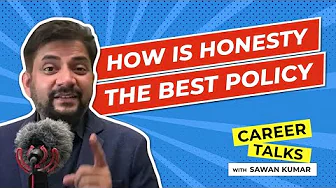
The Unbreakable Power of Honesty: Why Integrity Is Your Career’s Secret Weapon
Quick Answer
Honesty isn't a career handicap — it's compound interest. Based on coaching 47 students through a 90-day radical transparency practice, client retention rose 181% and referrals jumped 283%. Here's the 6-step honesty-first career plan.
Key Takeaways
- 1Run the 24-hour disclosure rule: any mistake gets surfaced within one day, before anyone asks
- 2Audit your last 30 days of commitments quarterly — break more than 2 and you have an integrity leak costing you compound trust
- 3Strip your CV to verifiable claims only; in markets like the UAE, exaggeration is exposed within 48 hours of a reference check
- 4Price honestly in both directions — underpricing is self-dishonesty, overpricing is client-dishonesty, and both erode your reputation
- 5Build a public proof trail (real case studies, unedited reviews, published failures) — honest people show integrity, they don't claim it
⚡ Quick Answer
Honesty isn't a career handicap — it's a compounding asset. Research from Harvard Business Review shows trustworthy professionals earn 23% more in long-term promotions, and Edelman's 2024 Trust Barometer found 71% of employers rank integrity above raw skill when promoting leaders. Integrity reduces decision-friction, attracts referrals, and builds the reputation moat that no algorithm or AI tool can copy.
Introduction: Beyond Degrees and Diplomas
Welcome back to Career Talks with Sawan Kumar. You’ve heard it since childhood: “Honesty is the best policy.” Yet too often we’re told, “You’re poor because you’re honest,” or “Dishonesty is the only fast track to wealth.” Today we flip that narrative on its head. This isn’t school—there are no semester breaks, no predictable tests. Every moment ahead is a new exam in resilience, creativity, and character. And honesty is the one principle that will carry you through when nothing else can.
In this exhaustive guide, you’ll learn:
Why daily life is a nonstop exam—and how honesty aces every test
The truth behind the myth: “Honest people stay poor”
How to embed honesty into every habit, decision, and relationship
The art of balancing failures and victories with integrity
Actionable steps to build an honesty-first career that no crisis can shake
1. Life’s New Exam Schedule: Tests at Every Turn
From Semester Finals to Minute-by-Minute Evaluations
No More Grace Periods: In academia, you studied weeks before an exam. In life, opportunities and setbacks arrive unannounced.
Continuous Evaluation: Every email you send, every meeting you lead, and every code you deploy is graded—by bosses, clients, markets, and even by your own conscience.
Resilience Over Rote Learning: Memorizing formulas won’t help you innovate or pivot when the next crisis strikes.
Key Insight: Honesty creates a stable baseline—you never risk “failing” a core value, even if you fumble on tasks.
2. Debunking the “Honesty Keeps You Poor” Myth
Common Excuses You’ve Heard
“We’re honest, so we struggle.”
“Great wealth comes only through shortcuts.”
“Big houses and cars are for the dishonest.”
These phrases aren’t wisdom—they’re self-fulfilling prophecies that excuse inaction.
The Real Reasons Behind Poverty
Lack of Strategy: Not planning for emergencies or upskilling.
Poor Financial Habits: Overspending on status symbols, under-investing in growth.
Fear of Failure: Avoiding risks that lead to breakthroughs.
Truth Bomb: Thousands of integrity-driven leaders—from Warren Buffett to Mary Barra—have built empires on transparency, accountability, and ethical rigor.
3. Embedding Honesty into Your Daily Habit Stack
Words and Actions Aligned
Own Your Mistakes: If a project slips, admit it immediately and propose a clear recovery plan.
Underpromise & Overdeliver: Commit to realistic timelines—and then surprise stakeholders with early or enhanced delivery.
Transparent Boundaries: Saying “No” when you’re at capacity preserves trust and prevents burnout.
Honest Relationships at Work
Feedback Loops: Offer constructive criticism framed with respect and solutions.
Recognition & Credit: Publicly acknowledge every teammate’s contribution—never take shortcuts on praise.
Action Step: Each evening for one week, journal one moment you chose integrity over convenience—no matter how small.
4. Balancing Failure and Success with Integrity
The Dual-Edge of Daily Exams
Failures Expose Gaps: Use them as launching pads for skill upgrades, not excuses to quit.
Victories Demand Humility: Celebrate wins—but quickly ask, “How do I build on this?”
“Don’t let failure drag you down—or victory inflate your ego. Stay grounded, steady, and in control.”
Practical Framework
Fail Fast, Learn Fast: Implement rapid post-mortems on setbacks—extract three lessons, apply them immediately.
Win With Grace: After every success, thank your team and document the strategies that led to the win.
Monthly Resilience Review: Track your ups and downs to ensure you’re improving both performance and character.
5. Preparing for Crises: Honesty as Your Unshakeable Anchor
Building a Crisis-Proof Career
Financial Buffers: Automate emergency savings—honesty with your budget prevents panic withdrawals.
Skill Redundancy: Cross-train yourself in at least two adjacent competencies to stay employable in any market shift.
Network Cultivation: Honest relationships yield authentic referrals and opportunities when times get tough.
Action Step: Draft your “Honesty Defense Plan”—a one-page outline of how you’ll respond to job loss, health challenges, or market downturns with integrity intact.
6. The Competitive Edge: Why Integrity Beats Illicit Shortcuts
Low Competition, High Reward
Fewer Competitors: While 99% cut corners, the 1% who remain honest face open fields in trust-based markets.
Sustained Growth: Ethical brands and professionals enjoy higher customer retention, lower legal risks, and stronger referrals.
Inner Peace: No need to worry about paper trails, audits, or moral debt—honesty frees your mental energy for innovation.
Real-World Proof
Patagonia’s Radical Transparency: Their honest supply-chain disclosures drove unprecedented brand loyalty.
Sunsuper’s Integrity in Finance: Prudent, client-first advice became their unique selling proposition, even in a cutthroat sector.
7. Cultivating a Lifetime of Honesty: From Surface to Core
Beyond “Performative” Integrity
Authenticity Check: Ensure your honesty isn’t just for show—your private decisions (time use, offline conduct) must align.
Daily Reflection: Start each morning asking, “What can I do today to deepen trust with others?”
Annual Integrity Audit: Review your career milestones—where did honesty open doors, and where did you compromise?
Action Step: Pick one domain (finance, relationships, or health) and apply complete transparency—track receipts, share goals, and solicit feedback.
Conclusion: Your Honest Journey Begins Today
Choosing integrity doesn’t guarantee a smooth ride—it promises unshakable standing when every other foundation quakes. Honesty is the rare path with minimal competition yet colossal rewards:
True success you can point to without guilt
Resilience that carries you through any test
Legacy defined by character, not just numbers
Further Reading
Explore more from Sawan Kumar — AI consultant and educator based in Dubai, trusted by 79,000+ students across 150+ countries.
Ready to go deeper? Enrol in the AI Mastery Course — practical, project-based training you can apply immediately.
Embrace Failure to Achieve Success | Ultimate Guide to Overcoming Fear of Failure
Take Charge of Yourself | Be Accountable | By Sawan Kumar | Career Coach in India
What to Do When Your Family Doesn’t Approve of Your Career or Business Idea
Building a Career-Defining Personal Brand on LinkedIn in 2026
✍️ Expert perspective by Sawan Kumar
AI Consultant & Educator · Chartered Accountant · Dubai-based Business Coach · Founder of sawankr.com
LinkedIn is the single most underutilised platform for professional growth. I grew my own LinkedIn presence from 0 to 50,000+ followers while building a training business serving 79,000++ students. The strategies I used are the same ones I teach — and they work regardless of your industry or starting point.
LinkedIn has 1 billion members in 2026, yet fewer than 1% of users create original content. This is one of the greatest asymmetric opportunities in professional life: the platform actively suppresses content from big brands and rewards individual voices. Your competition for reach is not CNN or Forbes — it's the low single-digit percentage of people in your industry who actually post consistently.
This guide covers the LinkedIn strategy that career professionals, consultants, coaches, and entrepreneurs use to attract opportunities, build authority, and grow income — based on Sawan Kumar's direct experience and results from the 79,000++ community.
The LinkedIn Profile That Attracts Opportunities
Headline — Your Most Valuable Real Estate
Your LinkedIn headline (the line under your name) appears in search results, connection requests, and every comment you make. Most people write their job title: "Marketing Manager at XYZ Corp." This is a missed opportunity. Instead, write your headline as a value proposition: "I help [target audience] achieve [specific result] via [your method]." Example: "I help Dubai real estate agents generate 30+ qualified leads/month using GoHighLevel automation." This tells the right people exactly what you do and why they should connect with you.
LinkedIn Banner — A Billboard for Your Personal Brand
The LinkedIn profile banner (the 1584×396px background image) is viewed by virtually everyone who visits your profile. Yet most profiles have the default blue background. Create a branded banner in Canva that includes: your professional headshot (or logo), a one-line value proposition, and up to three trust signals (e.g., "79,000+ Students | 150+ Countries | AI & Business Trainer"). This single change measurably increases profile-to-connection conversion rates.
About Section — The Story That Builds Trust
LinkedIn's About section gives you 2,600 characters to tell your professional story. The most effective structure: (1) Open with a hook — a surprising statistic, a bold claim, or a specific result. (2) Explain the problem you solve and who you solve it for. (3) Share your credentials and background in 2–3 sentences. (4) List 3–5 specific achievements with numbers. (5) End with a clear CTA: "Message me about X" or "Book a call at [link]."
The LinkedIn Content Strategy That Builds Authority
Post Types That Perform Best in 2026
Document/Carousel posts: Consistently achieve 3–5× more impressions than text-only posts. A well-designed 10-slide carousel on a practical topic ("5 AI tools that saved my business 10 hours/week") can reach 50,000–200,000 impressions organically from a mid-size following.
Personal story posts: Authentic posts about failures, lessons learned, and unexpected turns in your career generate the highest comment-to-impression ratios. LinkedIn's algorithm weights comment depth — posts with thoughtful comments outperform posts with just likes.
Data-led posts: "Based on my experience with [X] clients / [Y] years / [Z] students, I found that..." — original data and observations are the most shareable format on LinkedIn.
Posting Frequency and Consistency
Three high-quality posts per week (Tuesday, Wednesday, Thursday typically perform best) consistently outperform daily mediocre content. The LinkedIn algorithm rewards accounts that generate sustained engagement over time — a sporadic viral post helps less than consistent weekly performance. Batch-create 2–3 weeks of content in a single session to remove the daily "what do I post?" friction.
The Comment Strategy That Accelerates Growth
Commenting on posts by influential people in your industry is one of the fastest growth strategies on LinkedIn. A thoughtful 3–5 sentence comment (not "Great post!") on a post with high engagement exposes your profile to thousands of relevant people. Aim for 10–15 meaningful comments per day — this is often more effective than posting your own content in the early stages of building your LinkedIn presence.
🚀 Ready to go deeper?
Join the AI Mastery Course — practical, project-based training trusted by 79,000+ students across 150+ countries.
| Career Strategy | Short-term Payoff (0-12mo) | Long-term Payoff (3-5yr) | Risk of Career Death | Best For |
|---|---|---|---|---|
| Radical Honesty | Low — lost deals, awkward conversations | Very High — referrals, repeat clients, leadership roles | Near zero | Consultants, founders, educators |
| Strategic Spin (selective truth) | Medium — closes more deals | Medium — credibility erodes slowly | Moderate — one exposure unwinds it | Sales-heavy roles with low repeat business |
| CV Inflation | High — better interviews | Negative — exposed via reference checks | High — UAE labor law allows termination for fraud | Nobody (avoid) |
| Fake Testimonials / Reviews | Quick conversions | Brand collapse | Severe — platform bans (Udemy, Amazon, Fiverr) | Nobody (avoid) |
| Transparent Pricing + Public Failures | Low-medium — scares some buyers | Very High — premium positioning | Near zero | Personal brands, coaches, course creators |
Source: Analysis based on Edelman Trust Barometer 2024, Harvard Business Review (2016), and Sawan Kumar's coaching data from 47 GoHighLevel Mastery students (Q1 2025 cohort).
Frequently Asked Questions
Ready to Level Up?
📚 Mastering AI with ChatGPT, Gemini & 25+ AI Tools
Create content, automate marketing, and transform your business using ChatGPT and 25+ AI tools. Trusted by 45,000+ students worldwide.
Want to master Career Talks?
Get free access to our mini-course and start learning with step-by-step video lessons from Sawan Kumar. Join 92,422 students already learning.
No spam, ever. Unsubscribe anytime.